Milwaukee and nearby Milwaukee County
Milwaukee Foundation Repair: The Walls, the Water and the Clay Behind Them
Foundation repair in Milwaukee usually starts with one of two complaints: a basement wall that has cracked or moved, or water that keeps finding its way in. Both trace back to the same ground, stiff glacial clay that holds water and freezes hard, and to houses whose median year built is 1953. This site explains the repairs using Wisconsin's own code and named national price guides, then hands your request to one independent local specialist.
About 34% of Milwaukee homes were built in 1939 or earlier (U.S. Census), and Wisconsin code sets footings at least 48 inches below grade. The typical foundation repair runs $2,200–$8,200 in Fixr's 2026 guide, and wall anchors cost $80–$150 per foot (HomeGuide, 2025).
Is foundation repair in Milwaukee about the walls or the water?
Usually both, which is why a good visit looks at each. Match what you see to a page:
- A block wall with a long sideways crack, or one leaning in at mid-height: soil pressure. Anchors, carbon fiber, steel beams or excavation; see bowed basement walls.
- A corner dropping, stair-step cracks, or a front stoop tipping away from the house: settlement or a shallow footing; see settling corners and stoops.
- Water at the cove joint, through a crack or up the floor drain: groundwater, roof water or the sewer; see basement waterproofing.
- No sump, a sump that never stops, or none at all in an old house: see sump pump installation.
Why does Milwaukee clay push so hard on a basement wall?
Because clay holds water, and wet clay is heavy. Wisconsin's Uniform Dwelling Code gives designers a table of soil loads on basement walls: clean sand and gravel are rated at 30 pounds per square foot for every foot of depth, while low- to medium-plasticity clay is rated at 60, twice as much. Saturated soil adds water pressure on top of that, and the code calls high-plasticity clay unsuitable as backfill at all. Borings logged by the Wisconsin Geological and Natural History Survey along the Milwaukee and Menomonee rivers describe the local Oak Creek and Ozaukee tills as stiff silty clay to clayey silt. Then comes winter: NOAA's 1991–2020 normals for Milwaukee Mitchell Airport count about 123 nights a year at or below freezing, and wet clay against the top of a wall expands as it freezes.
Repairs explained for Milwaukee basements
- Bowed and cracked basement wallsWhy wet clay pushes block walls in, and how anchors, carbon fiber, steel beams and excavation compare.
- Settling corners, stoops and porchesSoft river-valley ground, shallow stoop footings and Wisconsin's 48-inch rule, with piers and slab jacking compared.
- Basement waterproofing in MilwaukeeGroundwater, roof water or the sewer: finding the source, drain tile and sumps, and Wisconsin's seller's analysis rule.
- Sump pump installationNew pits in old floors, Wisconsin's sump size and cover rules, backups, and where the water may go.
- What foundation repair costs in MilwaukeePublished, dated ranges for anchors, carbon fiber, piers, drain tile and sumps, and the local things that move a bid.
Ground, warning signs and Wisconsin rules
- Clay till, river flats and frostWhat lies under Milwaukee houses, why clay loads a wall, where the soft ground is, and how deep frost goes.
- What each foundation sign usually meansCracks, a wet cove joint, a tipping stoop, a busy sump: each answered first, with how soon to act.
- Wisconsin contracts, permits and home salesWhat a written contract must include, the waterproofing seller's analysis, who may pull permits, and the condition report.
Bungalows, duplexes and Polish flats
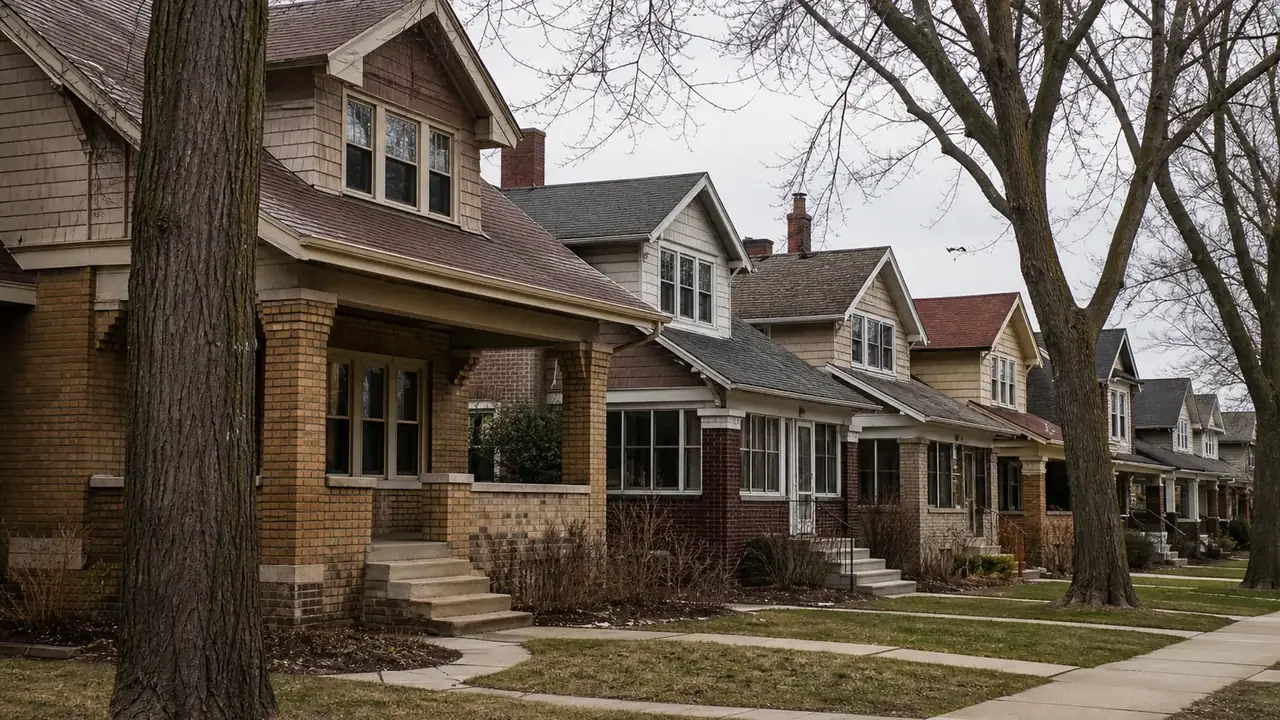
Milwaukee's housing is old and often shared. The Census counts 259,101 housing units in the city: 34% built in 1939 or earlier, another 30% in the 1940s and 1950s, and a median year built of 1953. More than one unit in five (21.5%) sits in a two-unit building, most often the familiar upper-and-lower duplex. The Encyclopedia of Milwaukee describes how the Polish flat came about: owners raised a workers' cottage on posts, dug a semi-basement underneath and replaced the old foundation timbers with brick walls to make a second home below. A repair in a duplex or a Polish flat can mean working around a finished lower unit, and sometimes two households, so say so when you send a request.
Old foundation drains tied to the sewer
The City of Milwaukee's Department of Public Works says most homes built after 1920 have foundation drains around them, and that many built before 1954 had those drains piped straight into the sanitary sewer instead of to a sump. In a storm, groundwater from many basements then competes with sewage for the same pipe, which raises the risk of basement backups. In neighborhoods the city has targeted, its MMSD-funded program has disconnected those drains and installed sump systems at no cost to residents. A waterproofing bid on an older Milwaukee house should say where the drain tile goes now and where it will go after the work.
What happens when you send a request
MKE Foundation is an information and referral site. Nobody here inspects, designs or repairs foundations, and nobody from the site visits your home. The form goes to one independent foundation and waterproofing specialist who works in Milwaukee and nearby suburbs and pays this site for referrals. Asking costs you nothing, and you remain free to get other bids.
Questions homeowners ask
Why do so many Milwaukee basements have bowed block walls?
Mostly because of the soil against them. Borings across a large part of Milwaukee show stiff, clay-rich glacial till that drains slowly, and Wisconsin's code rates that kind of clay at twice the sideways load of clean sand and gravel. When it stays wet and freezes, the top half of a block wall takes the push, and it gives at a mortar joint as a long horizontal crack.
My house was built in the 1920s. Could its drain tile run into the sewer?
It could. The City of Milwaukee's public works department says many homes built before 1954 had foundation drains connected directly to the sanitary sewer. A plumber or waterproofing specialist can trace the tile with a camera or by finding where it enters the floor drain. Disconnecting it usually means a new sump that sends the water outside.
Who will contact me after I send the form?
One independent foundation and waterproofing specialist who serves Milwaukee, not a sales desk and not a list of companies. They reach out using the details you gave, ask about the house and arrange a visit only if you want one. Some companies charge for that first trip and some do not, so ask up front.
Sources
- U.S. Census Bureau, American Community Survey 2020-2024: year structure built (B25034), Milwaukee city
- U.S. Census Bureau, American Community Survey 2020-2024: units in structure (B25024), Milwaukee city
- Wisconsin Administrative Code SPS 321.18: Foundations (soil lateral load table)
- City of Milwaukee Department of Public Works: Private Property Infiltration and Inflow Reduction
- Encyclopedia of Milwaukee (University of Wisconsin-Milwaukee): Polish Flat
Tell us what the basement is doing
A crack you have been watching, water after a storm, a stoop leaning away from the house: a sentence or two is enough. It goes to one independent foundation and waterproofing specialist who works in Milwaukee.